

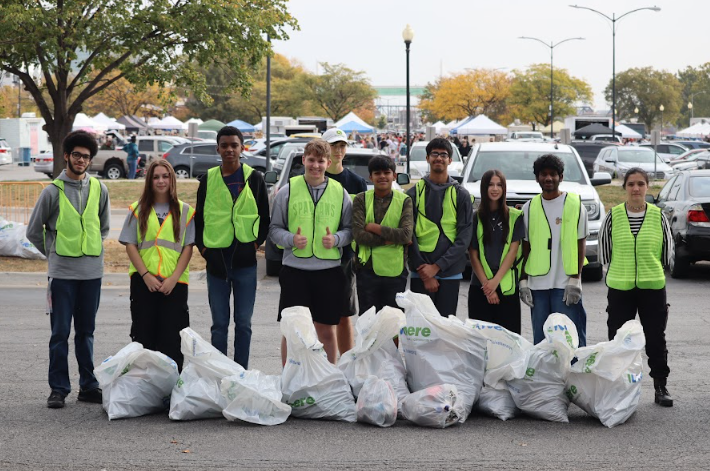
Many high school students spend time volunteering in their communities, helping local organizations, schools and nonprofits. At Pleasant Valley, students are required to complete 30 service learning hours as a freshman/sophomore and 40 hours as a junior/senior to graduate.
While the goal of the program is to promote community engagement and encourage students to give back, some students believe the requirement can have unintended effects.
Service learning programs are designed to help students connect classroom learning with real-world experiences. These programs can help students develop responsibility, leadership skills and stronger connections with their communities.
However, when volunteering becomes a graduation requirement rather than a personal choice, some students believe it changes their perception of the experience.
“I think volunteering is a really good thing,” said senior Elizabeth Otts. “However, when it’s required to graduate, it can start to feel like something you’re just doing to get it over with instead of something you actually care about.”
Many students already juggle classes, extracurricular activities and jobs, which can make service opportunities more stressful than meaningful.
Senior Jonathon Hawkes said the pressure of finishing hours sometimes overshadows the purpose behind them. “I’ve seen a lot of people just try to get their hours done as quickly as possible,” Hawkes said. “It becomes more about completing the requirement than actually helping the community.”
Access to opportunities can also vary depending on students’ schedules and transportation. “Although the school posts volunteer opportunities, not every student has access to them,” senior Lydia Rohner said. “Some students have a harder time finding transportation or time in their schedules, which makes completing the volunteer hours more complicated.”
Research suggests that mandatory service requirements can occasionally affect how students view volunteering in the long term. One study found that students who were required to complete service hours were less likely to volunteer later compared to students who chose to participate on their own.
For many students, the issue is not about volunteering itself; helping the community can be a valuable experience, especially when students find causes they genuinely care about. The challenge arises when service becomes another task on a long list of graduation requirements.
Programs that encourage students to explore different organizations or volunteer opportunities about which they are passionate may create stronger connections to community service. When students feel personally invested in the work they are doing, they may be more likely to continue volunteering beyond high school.
Ultimately, the goal of service learning is to build lifelong habits of community involvement. If students begin to associate volunteering with required hours instead of meaningful experiences, the program may not achieve the impact it hopes to create.


