

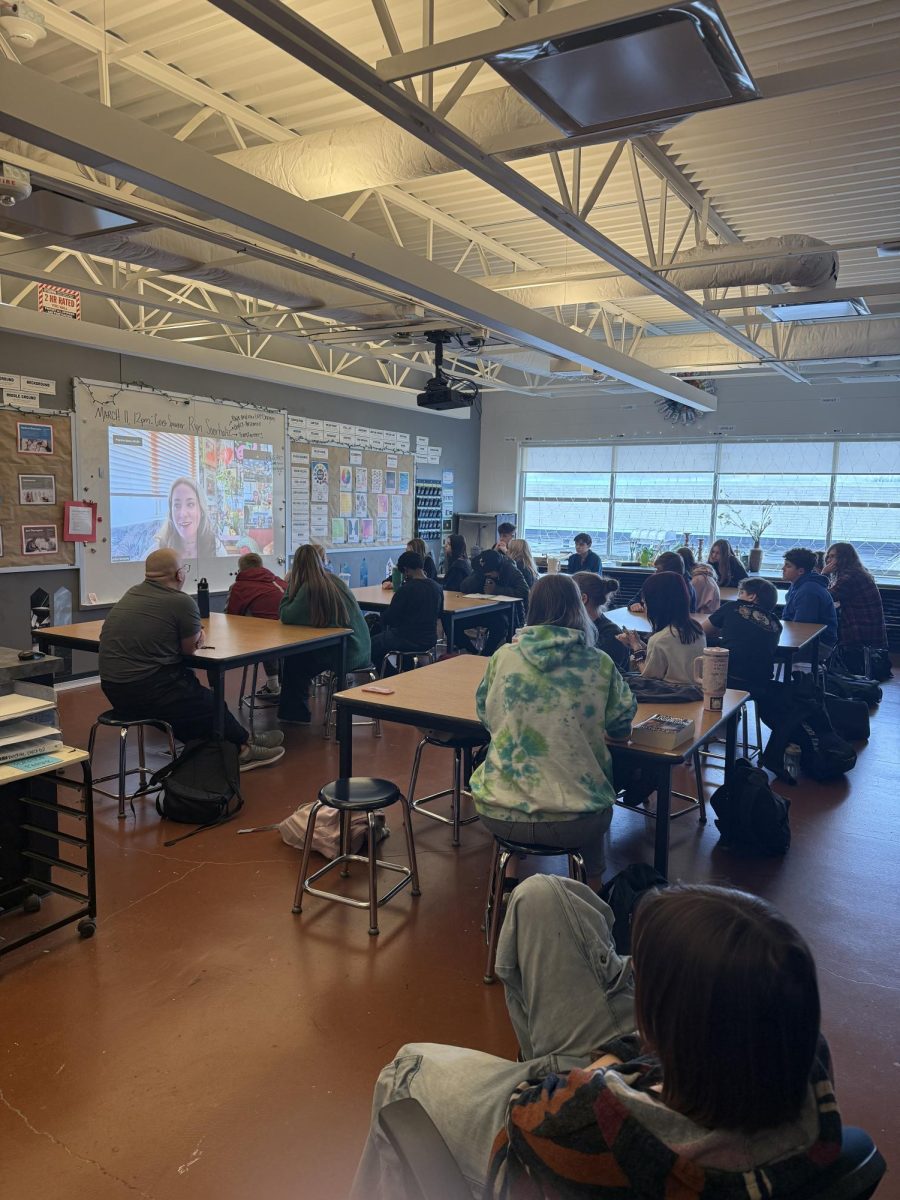
Students in art classes at Pleasant Valley High School recently had the opportunity to hear from professional animator Ryn Soorholtz, who had a virtual meeting with the class to share her experiences working in the animation industry. Soorholtz, who contributed to the Disney film Raya and the Last Dragon, Bojack Horseman and various Transformers movies, gave students a firsthand look at what it takes to turn artistic passion into a career.
During her presentation, Soorholtz walked students through the animation process, explaining how a project develops from early sketches to the final scenes on screen. She emphasized that animation is about storytelling, problem solving, and collaboration. By giving examples from her own work, she shared how ideas change and improve over time through teamwork and feedback.
Soorholtz also shared her personal journey into the field, highlighting the importance of persistence and continuous practice. She explained that success in animation doesn’t happen overnight and encouraged students to stay committed to improving their skills. Rather than fearing mistakes or wrong decisions, she described them as essential parts of learning and growing as an artist.
Art teacher Ashley Willits explained that bringing in guest speakers is part of a larger goal of the department. “There are so many creative careers out there that students may not know about, and we want to offer every opportunity available to expose students to art careers,” she said.
To students, one of the most engaging parts of the visit was her discussion of Raya and the Last Dragon. Soorholtz described the level of detail involved in creating animated films, from designing characters to refining movements and expressions. She also spoke extensively about the collaborative nature of large projects in studios, where teams of artists, designers, and directors work together to bring a story to life.
Additionally, Soorholtz answered a variety of student questions about careers in animation. She offered advice on being open to new opportunities and exploring different things. Her responses gave students practical guidance on how to begin pursuing a future in art. Experiences like this help challenge common misconceptions about careers in the arts. “There is a misconception that ‘art does not make money,’ but that could not be further from the truth,” Willits noted. “Actually getting to communicate with professionals and asking them questions is what sparks the inspiration in students.”
Students who attended the presentation also found it inspiring. One student, Chase Hessenkemper, said the speaker “made art seem like a more possible career” and emphasized Reactions like this show the impact that hearing from professionals can have on students who are still exploring their interests.
Overall, Soorholtz’s visit left a strong impression on the classes. By sharing both her creative process and her career journey, she helped students better understand what it means to work in animation. Experiences like this not only make learning more engaging, but also encourage students to consider how their own passion could turn into future careers.


