

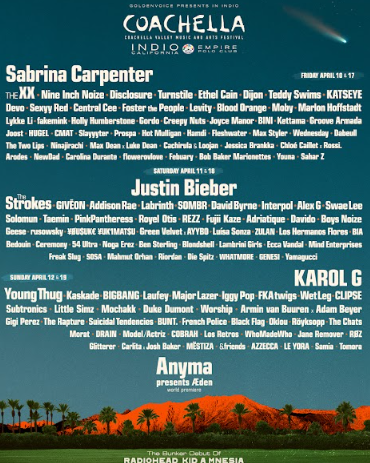
Scrolling through social media, this year’s Coachella Music Festival felt distinctly different than past events.
Instead of focusing only on their newest releases, many artists leaned heavily into songs from the early to mid-2010s. Tracks that once played during hangouts in elementary school or on middle school bus rides suddenly became the highlight of major performances. This major trend, present at Coachella and other smaller festivals, could very well signal a return to nostalgic form within western pop music.
In a time where trends move quickly and new music is always being released, there’s something comforting about returning to songs that already have meaning attached to them.
PV senior Lili Guicho is among many new young adults looking back on their preteen years. “Lots of us reminisce about the old times before COVID-19 had turned our lives upside down,” said Guicho. “So a lot of us find comfort in those songs from the 2010s era because they bring us back to a time before COVID-19 and before our teenage responsibilities.”
Songs that defined the early 2010s, like “Baby” by Justin Bieber and “Latch” by Disclosure, found a second life both at Coachella and online. These tracks are now being rediscovered and appreciated anew by the same generation that grew up listening to them. “I think people like going back to that time because things felt simpler, especially compared to everything going on now,” noted Guicho.
The throwbacks didn’t stop at the music; one of the most viral throwbacks was a pop-up from Starbucks selling its iconic Unicorn Frappuccino, a drink that originally went viral in 2017.
The drink’s bright, colorful and chaotic aesthetic matches that of the mid 2010s, helping fond memories of childhood resurface among older generations. Its return at Coachella felt like a tribute to the past.
Outside of music festivals, this trend centered on nostalgia is especially visible on TikTok, where “2016 core” has become its own category of content.
PV sophomore Marrissa Cabrales is one of many who have stumbled upon this trend. “I think people miss when everything felt more random and fun online,” she said. “2016 core is like bringing that vibe back.”
Users have since recreated old outfits, remixed Vine era humor and brought back songs that once dominated the charts, reviving a distinct moment in internet culture. The era is often remembered for its bold fashion, early influencer culture and sense of online creativity that felt less curated than today’s social media, which has helped fuel the rise of “2016 core” on various social platforms.
Numerous artists are tapping into the trend’s second wind through setlists. Influencers capitalized on the “2016 era” content on TikTok that gained millions of views and led to sponsorships. Additionally, brands are recreating viral products that fans are actively seeking out.
For Gen Z, 2016 is a comforting vibe that helps ground them amidst unprecedented times of global conflict. The era’s familiarity and connotation of childlike freedom have allowed artists who embrace its aesthetics to present a refreshing sense of joy.
As trends continue to cycle faster, it’s likely this won’t be the last time nostalgia takes the spotlight. For now, Coachella 2026 has shown that nostalgia drives what people listen to, proving that older hits can be just as powerful as new ones.


